

Dental Cleaning vs Deep Cleaning in South Austin: What’s the Difference?


To keep your smile healthy, you must visit your dentist regularly. However, do you know the difference between a routine teeth cleaning and a deep clean? Your health starts here. If you want to be proactive about your oral health, know the difference so you can make the best decisions for your teeth. In this blog post, we will explore the differences between a routine dental cleaning and a deep cleaning so that you can be informed and confident about your upcoming visit.
Dr. Aleeahna Phan, an experienced dentist in South Austin, reviews this article.

What Is Dental Cleaning?
A periodontal cleaning is another term for a standard, routine dental cleaning. It usually involves removing plaque and tartar buildup from your teeth. Plaque is a sticky, colorless deposit of bacteria that forms on your teeth all the time; tartar, or calculus, is hardened plaque that you can’t remove except with professional cleaning tools.
During a dental cleaning, the dental hygienist uses special tools to remove plaque and tartar above the gum line. This will help to eliminate harmful bacteria that can lead to cavities or gum disease. At the end of your cleaning, a fluoride treatment may also be applied to help maintain your tooth enamel and prevent decay.
What Is Deep Cleaning?
Now, let’s address deep cleaning — aka scaling and root planing. While regular cleaning addresses the surfaces of your teeth, deep cleaning goes much deeper, below the gum line. It’s most often advised when there are signs of gum disease — like inflammation, bleeding, or pockets of infection.
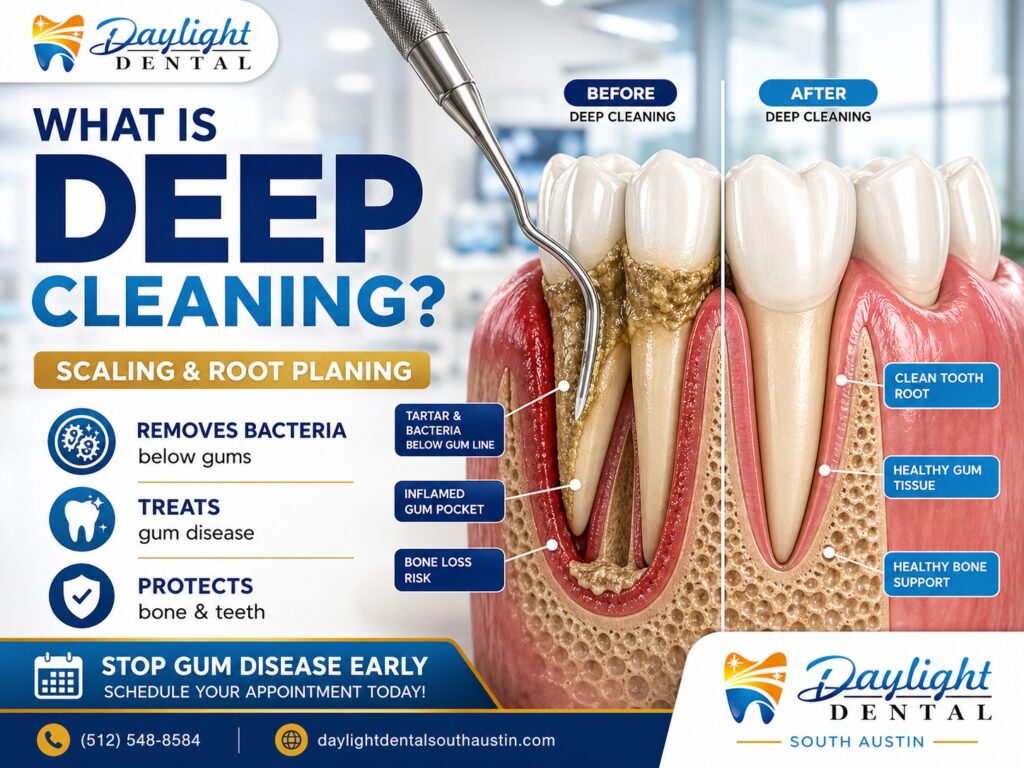
During this procedure, your dentist or hygienist will use special tools to clean the surfaces and roots of your teeth, removing bacteria and tartar buildup beneath the gums. A deep cleaning smooths out the roots of your teeth, preventing further damage to the gums and bone structure. This process can help treat gum disease, whether it’s a mild condition in the early stages of gingivitis or a more severe condition at the advanced stage called periodontitis.
How Often To Get a Deep Cleaning
As long as you maintain good oral hygiene and visit your dentist regularly, a standard teeth cleaning should be sufficient. But if your dentist detects early signs of gum disease, or if you have symptoms such as tender gums, bleeding when you brush, or persistent bad breath that doesn’t improve, a deep cleaning may be appropriate.
The following are signs that suggest you could use a deep cleaning:
- Swollen or bleeding gums
- Gum recession
- Persistent bad breath
- Sensitive teeth
- Teeth not in their normal position or becoming loose
If you have periodontal disease, deep cleaning can help control the disease and prevent it from spreading further because, left untreated, it could make you lose teeth.
What Happens During a Deep Cleaning
Depending on the amount of buildup, a deep clean usually requires multiple appointments. Your dentist may choose to numb the area with a local anesthetic, depending on the severity of your gum disease, to make the procedure more comfortable. The process can be done over two visits, with one side of your mouth cleaned at a time.
It’s common to feel a little sore or have some swelling in your gums following a deep cleaning. Your dentist may also recommend taking over-the-counter pain medication to help alleviate any soreness. They may also recommend a follow-up visit to make sure your gums are healing properly.
Dental Cleanings vs. Deep Cleanings: What’s the Difference?
- Depth of Cleaning: The most noticeable difference is the depth of cleaning. A typical professional cleaning focuses on the surfaces of your teeth, whereas a deep cleaning also cleans the areas below the gum line.
- Purpose: Dental cleaning is designed to prevent problems such as cavities and plaque buildup. A deep cleaning, on the other hand, is generally required to treat gum disease and flush out any bacteria from the roots of your teeth.
- Treatment Time and Frequency: A routine cleaning is typically performed every 6 months, while deep cleaning is often scheduled based on the severity of gum disease and your oral health.
Prevention and Maintenance
The best way to avoid needing a deep cleaning is to stay on top of your dental cleanings. Twice-daily brushing with fluoride toothpaste and regular flossing can remove plaque before it hardens into tartar. Regular check-ups give your dentist a chance to monitor your oral health and identify issues early.
Regular dental cleanings are the best way to prevent gum disease. Learn more about the importance of preventive cleanings here.

Final Thoughts: Keep Your Smile Healthy
Maintaining your teeth goes far beyond brushing and flossing at home. But your dental cleaning is critical to keeping your smile bright and healthy. But don’t freak out if your dentist suggests you need a deep cleaning. It’s a standard, effective intervention that can help prevent more serious issues down the road.
Daylight Dental is your solution for routine and deep dental cleanings in South Austin. We strive to provide compassionate, comprehensive care to ensure your smile is in perfect shape!
Call us at (512)-548-8584 and book your consultation or cleaning today to get started toward optimal oral health.
Common Questions People Ask
How often should I get a dental cleaning?
It’s generally recommended to have a dental cleaning every six months, but your South Austin dentist may suggest more frequent visits if you’re at risk for oral health problems. Regular visits to a local dentist help maintain your oral health and detect issues early.
Can a deep cleaning cure gum disease?
A deep cleaning can help manage and treat gum disease by removing bacteria and tartar, but ongoing care and maintenance are essential for long-term success.
What are the signs that I need a deep cleaning?
Signs include swollen or bleeding gums, persistent bad breath, and tooth sensitivity. Your dentist will assess your needs based on these symptoms.
Is deep cleaning painful?
Most people experience some discomfort after a deep cleaning, but the procedure is generally well-tolerated. Local anesthesia is often used to minimize discomfort.
How long does it take to recover from a deep cleaning?
Recovery time varies, but most people experience swelling and tenderness for a few days. Follow your dentist’s aftercare instructions for a smooth recovery.