

Teeth Whitening with Gum Disease: A Risky Combination You Shouldn’t Ignore


Are you considering teeth whitening, but also have gum disease? It’s common to desire a brighter smile, but what if this simple cosmetic procedure could lead to more harm than good? If you’re struggling with gum disease, combining it with teeth whitening can pose serious risks to your oral health.
While whitening treatments are effective for many, they can cause more harm if your gums aren’t in good shape. Your oral health should always be your top priority, and it’s important to fully understand the risks before going ahead with teeth whitening treatments. Keep reading to learn why this combination can be problematic and how to manage your oral health effectively.
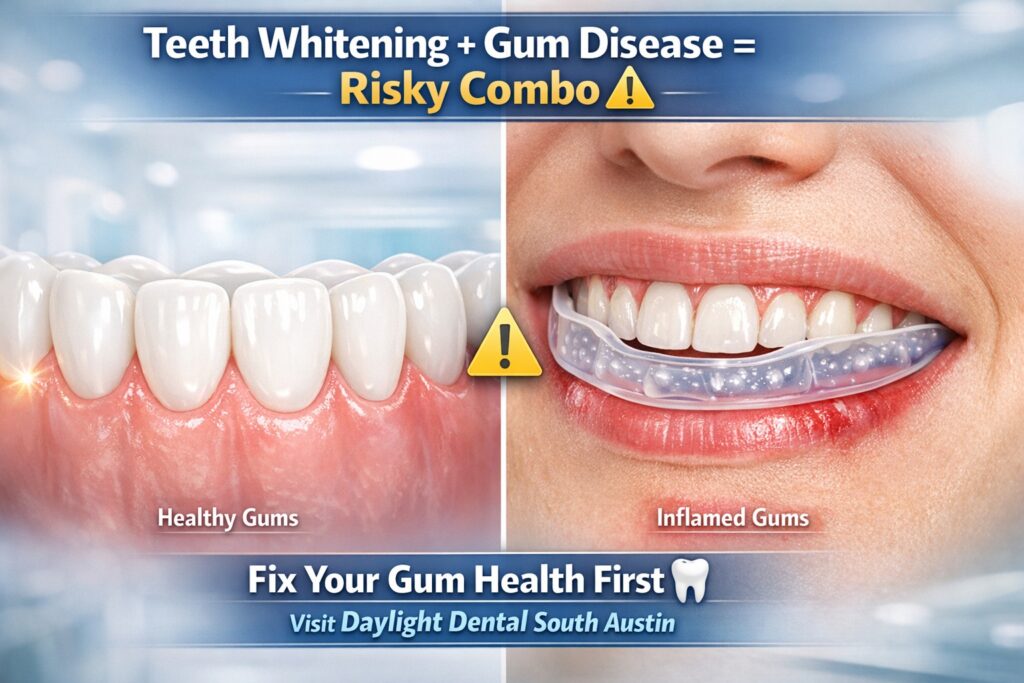
Understanding Gum Disease
Gum disease, also known as periodontal disease, is a common condition that affects the gums and can cause long-term damage to your oral health if left untreated. It’s generally classified into two stages: gingivitis and periodontitis.
- Gingivitis is the early stage of gum disease, often caused by poor oral hygiene that leads to plaque buildup on the teeth. This can cause the gums to become red, swollen, and bleed easily when brushing or flossing. Thankfully, gingivitis is reversible with proper care, including regular brushing and professional cleanings.
- Periodontitis, on the other hand, is a more severe form of gum disease. When gingivitis is not treated, it can progress to periodontitis, where the inflammation spreads deeper into the tissues that support the teeth. This stage can lead to tooth loss if not properly managed.
Causes and Symptoms
The primary cause of gum disease is the accumulation of plaque, a sticky, colorless film of bacteria that hardens into tartar if not removed. The risk factors for gum disease include poor oral hygiene, smoking, poor nutrition, certain medications, and even genetics. Common symptoms include swollen, bleeding gums, bad breath, gum recession, and loose teeth.
Connection to Oral Health
Gum disease doesn’t just affect your gums; it can impact your entire oral health. If left untreated, it can lead to tooth loss, gum recession, and even increase your risk of systemic conditions like heart disease and diabetes. Healthy gums are essential for maintaining strong, functional teeth. Therefore, taking care of your gums is crucial to ensuring the longevity of your smile.
Teeth Whitening Overview
Teeth whitening is a popular cosmetic dental procedure aimed at brightening teeth and removing stains. It’s a non-invasive treatment that can be done professionally at a dental office or at home with over-the-counter products.
- What is Teeth Whitening?
Teeth whitening works by breaking down the stains on your teeth, leaving them looking brighter and whiter. There are two main types of whitening options: professional whitening (done by a dentist) and at-home whitening (using products like strips, gels, or trays). Professional treatments often use stronger whitening agents and provide faster, longer-lasting results. - Common Whitening Products
The most common active ingredients in teeth-whitening products are hydrogen peroxide and carbamide peroxide. These ingredients work by penetrating the tooth enamel and breaking down stain molecules. Over-the-counter whitening products typically contain lower concentrations of these agents, while professional treatments use higher concentrations for more noticeable results.
Whitening can be an effective solution for those with yellowing or stained teeth, but it’s important to understand that it may not be suitable for everyone, particularly if you have certain dental conditions such as gum disease.
Is Teeth Whitening Safe with Gum Disease?
Teeth whitening may seem like a simple solution to brighten your smile, but if you have gum disease, it can worsen the condition. Here’s why combining whitening treatments with gum disease can be a risky choice:
- Increased Sensitivity
Gum disease already makes your teeth and gums more sensitive. When you undergo teeth whitening in South Austin, the whitening agents can irritate the sensitive gums and cause increased discomfort. This can make the already-existing symptoms of gum disease, like soreness and bleeding, much worse. - Gum Irritation
Whitening products can cause inflammation and irritation in the gums, especially when there is already an underlying condition like gum disease. The chemicals in whitening products can penetrate the gum line, which leads to further irritation and delayed healing for individuals with gum disease. - Risk of Complications
If your gums are not healthy, whitening treatments can contribute to complications such as further gum recession or tissue damage. Additionally, whitening products may not be effective in people with receding gums, as the exposed roots of the teeth may be more prone to sensitivity and may not respond well to the whitening treatment.
Teeth whitening can also compromise your enamel’s strength, which may be already weakened by the effects of gum disease. This weakens the tooth structure further, putting your teeth at risk of decay and damage.
Alternatives for Whitening When You Have Gum Disease
If you have gum disease but still desire a whiter smile, some alternatives can help you achieve your goal without putting your oral health at risk:
- Consult a Dentist
Before considering any teeth whitening treatments, it’s crucial to consult with a dental professional. They can evaluate the health of your gums and recommend safe alternatives for whitening if necessary. Your dentist may suggest a customized treatment plan that works in harmony with your gum disease treatment. - Gentler Whitening Options
For individuals with gum disease, your dentist may recommend gentler whitening methods, such as sensitivity-focused whitening treatments or using lower concentrations of whitening agents. This will help minimize the risk of irritation or discomfort. - Non-Whitening Solutions
If whitening isn’t a viable option for you, focusing on gum health and improving the appearance of your smile through other cosmetic treatments can be just as effective. Using natural remedies like oil pulling or focusing on preventive care like regular cleanings can help improve your smile while managing gum disease.
Treating Gum Disease Before Whitening
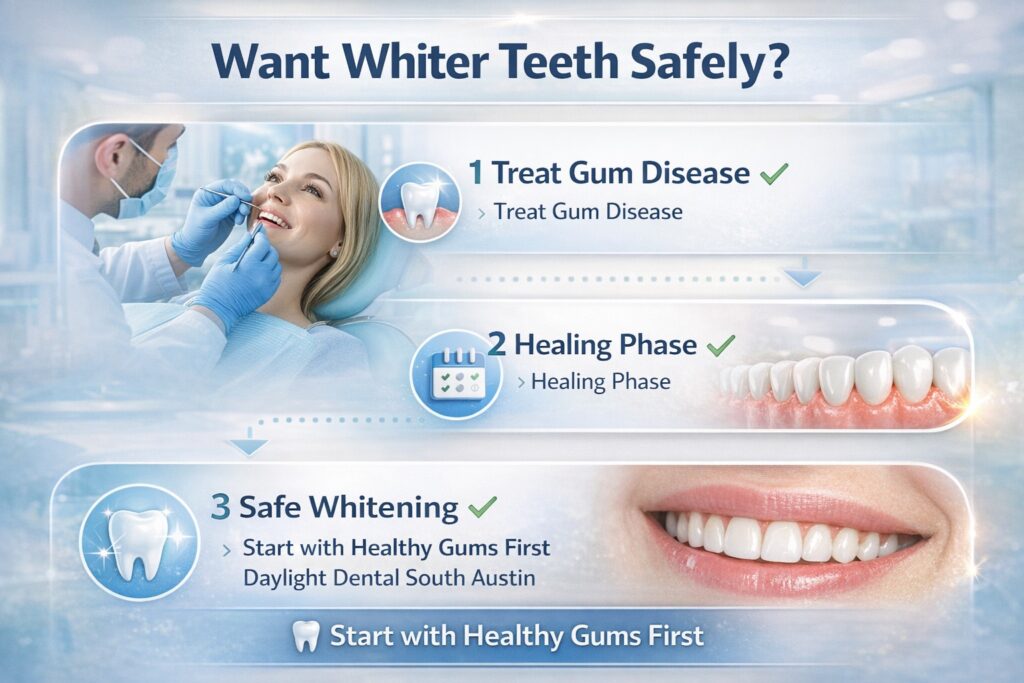
The most important step in ensuring that teeth whitening in South Austin is safe is treating gum disease first. Here’s how you can prepare your gums for whitening:
- Visit a Periodontist
If you have gum disease, it’s crucial to consult a periodontist (a specialist in gum health). A periodontist can provide deep cleanings, scaling, and root planing treatments that address gum disease at its root, reducing inflammation and improving gum health. - Steps to Recovery
The process of treating gum disease involves several key steps:- Professional Cleaning: Your dentist will perform a thorough cleaning to remove plaque and tartar buildup.
- Scaling and Root Planing: This procedure smooths the roots of the teeth, making it harder for bacteria to attach and reducing gum inflammation.
- Follow-up Care: Regular checkups and cleanings will be necessary to ensure the gums are healing and that the disease doesn’t return.
Once your gums are healthy and fully healed, you can safely consider teeth whitening as part of your smile makeover.
Teeth whitening can give you a stunning smile, but it’s essential to prioritize your oral health first. If you have gum disease, it’s best to treat the condition before considering any cosmetic treatments like whitening.
At Daylight Dental, we specialize in helping patients achieve beautiful, healthy smiles. If you’re interested in whitening but are concerned about your gum health, schedule a consultation with us today to create a safe, personalized treatment plan. We’re here to ensure you get the smile you’ve always wanted, without compromising your oral health.
Contact Daylight Dental now to book your appointment and start your journey toward a brighter, healthier smile!
Common Questions About Teeth Whitening & Gum Disease
How long should I wait after gum disease treatment to whiten my teeth?
It’s best to wait until your gums are fully healed, which may take several weeks to months. Your dentist can advise you on the right timing.
Is it safe to whiten my teeth after treating gum disease?
Once your gum disease is treated and your gums are healthy, teeth whitening can be a safe and effective option. Always consult with your dentist first.
What signs should I look for that my gums are irritated by whitening?
Redness, swelling, increased bleeding, and heightened sensitivity are signs that whitening products are irritating your gums.
Can whitening agents worsen gum bleeding?
Yes, whitening agents can worsen gum bleeding if your gums are already inflamed or infected, leading to more discomfort and longer healing times.
How can I prevent gum irritation when whitening my teeth?
Follow your dentist’s recommendations for gentler whitening methods and ensure your gums are healthy before using any whitening products.