

Top Signs You Need a Dental Filling Before a Cavity Gets Worse in Austin, TX


Taking care of your teeth is essential for maintaining a bright and healthy smile, and one of the most common dental issues people face is cavities. Left untreated, cavities can worsen, causing severe pain and even tooth loss. Addressing cavities early by getting a dental filling is one of the most effective ways to prevent further damage and protect your tooth from deeper decay.
If you live in Austin, it’s important to recognize the signs that you may need a dental filling so you can take action before the situation becomes more severe. Let’s dive into some common indicators that you might need a filling and why it’s important not to wait.
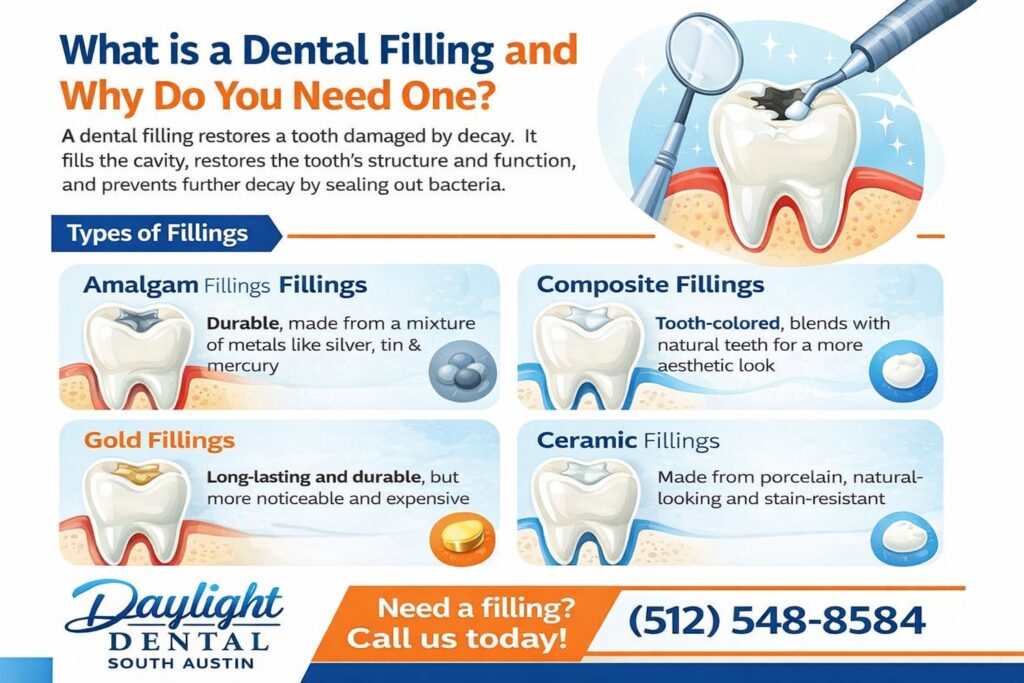
What is a Dental Filling and Why Do You Need One?
A dental filling is a material used to restore a tooth that has been damaged by decay. Essentially, when a cavity forms, it creates a hole in your tooth that can worsen over time. A dental filling helps to fill that hole, restoring the tooth’s structure, function, and appearance. It prevents further decay by sealing the area, which also prevents bacteria from getting in.
There are several types of fillings, including:
- Amalgam Fillings: These are made from a mixture of metals like silver, tin, and mercury. They’re durable and commonly used for back teeth, where the filling is less visible.
- Composite Fillings: These are tooth-colored fillings that blend well with your natural tooth color. They’re more aesthetically pleasing but may not be as durable as amalgam in large cavities.
- Gold Fillings: Known for their longevity and durability, gold fillings are often used in larger cavities, but they are more noticeable and can be pricier.
- Ceramic Fillings: Made from porcelain, these fillings offer a natural look and are often used for visible teeth. They’re strong and durable but may be more expensive.
Dental fillings are a proven solution to stop cavities in their tracks, and they help maintain your oral health by preventing more serious complications down the road.
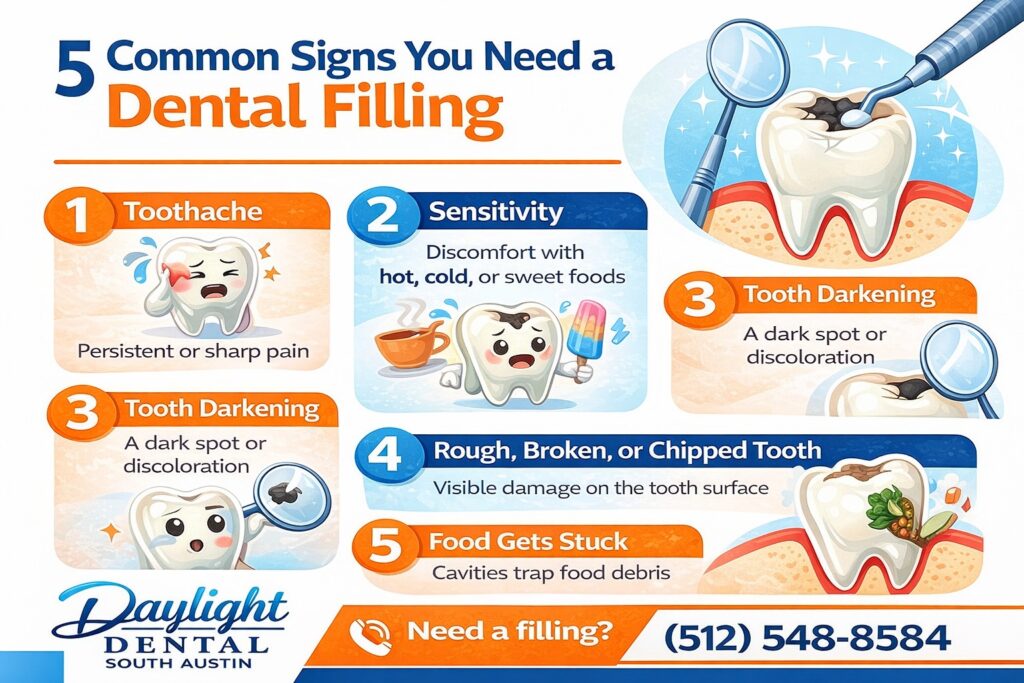
5 Common Signs You Need a Dental Filling
Recognizing the early signs of cavities is crucial for preventing further damage to your teeth. The earlier you act, the easier it is to treat the issue before it turns into something more serious, like an infection or tooth loss.
If you notice any of the following signs, it’s essential to schedule an appointment with Daylight Dental as soon as possible. Let’s take a look at the top signs that you might need a dental filling:
1. Tooth Sensitivity
Tooth sensitivity is one of the most common symptoms of a developing cavity. You may notice discomfort or a sharp pain when eating hot, cold, or sweet foods. This occurs because the decay in your tooth exposes the more sensitive inner layers, such as the dentin, which reacts to temperature changes or sugar.
If you’re feeling sensitivity frequently, it could be a sign that the enamel on your tooth is wearing away, leaving your tooth vulnerable to further damage. The good news is that dental fillings in Austin can help restore the tooth’s protective barrier, stopping the sensitivity from worsening and protecting the inner layers from additional decay.
2. Visible Holes or Pits in Your Teeth
One of the most obvious signs that a filling is needed is the appearance of visible holes or pits in your teeth. If you notice any small indentations or holes, likely that decay has already set in, and a filling is necessary to restore the tooth’s function and prevent further damage.
These holes can be difficult to detect without a professional examination, but you may notice dark spots or changes in the texture of your tooth. A dentist at Daylight Dental will help identify the severity of the cavity and recommend the best filling material to restore your tooth’s health.
3. Persistent Toothache
A persistent toothache is another red flag that you may need a dental filling. Toothaches caused by cavities are typically constant and can worsen over time. If the pain doesn’t go away or keeps coming back, it could be a sign that the cavity has deepened and reached the sensitive nerves inside the tooth.
As the decay spreads, the pain can become more intense. Don’t ignore prolonged tooth pain. It’s a sign that your tooth may be in trouble and requires immediate attention. Getting a dental filling as soon as possible can alleviate the pain and prevent the issue from escalating into a more severe problem.
4. Pain When Chewing or Biting
Experiencing pain when chewing or biting is a strong indication that there’s something wrong with your tooth. If you feel discomfort while eating, especially when chewing hard or crunchy foods, it might be due to a cavity that has affected the tooth’s structure. When a cavity is left untreated, the weakened tooth can begin to crack, making it painful to apply pressure while biting.
A filling can restore the tooth’s integrity, relieve the pain, and make chewing comfortable again. If you’re experiencing pain during chewing, it’s important to visit Daylight Dental as soon as possible to assess the damage and determine if a filling is needed.
5. Discoloration Around the Affected Tooth
Discoloration is another visible sign that a cavity is forming. You may notice dark spots, stains, or a yellowish appearance on the surface of your teeth. This discoloration often happens when the decay penetrates deep into the enamel, causing the tooth to lose its natural color.
While discoloration can sometimes be a result of staining from food or drink, it can also indicate an untreated cavity that requires attention. If you see dark spots or staining around a tooth, it’s a good idea to schedule a dental visit to determine if a filling is needed to prevent the decay from progressing further.
Why You Shouldn’t Wait to Get a Filling
Delaying treatment for cavities can lead to a variety of complications, including infection, abscesses, and even tooth loss. When left untreated, cavities can continue to grow, damaging the tooth further and possibly requiring a root canal or even extraction.
Cavities can also cause more serious health problems. Untreated tooth decay can lead to gum disease, which has been linked to other health issues such as heart disease and diabetes. By addressing cavities early, you not only protect your smile but also your overall health.
Getting a filling as soon as possible helps prevent these complications and ensures that your tooth stays healthy for years to come.
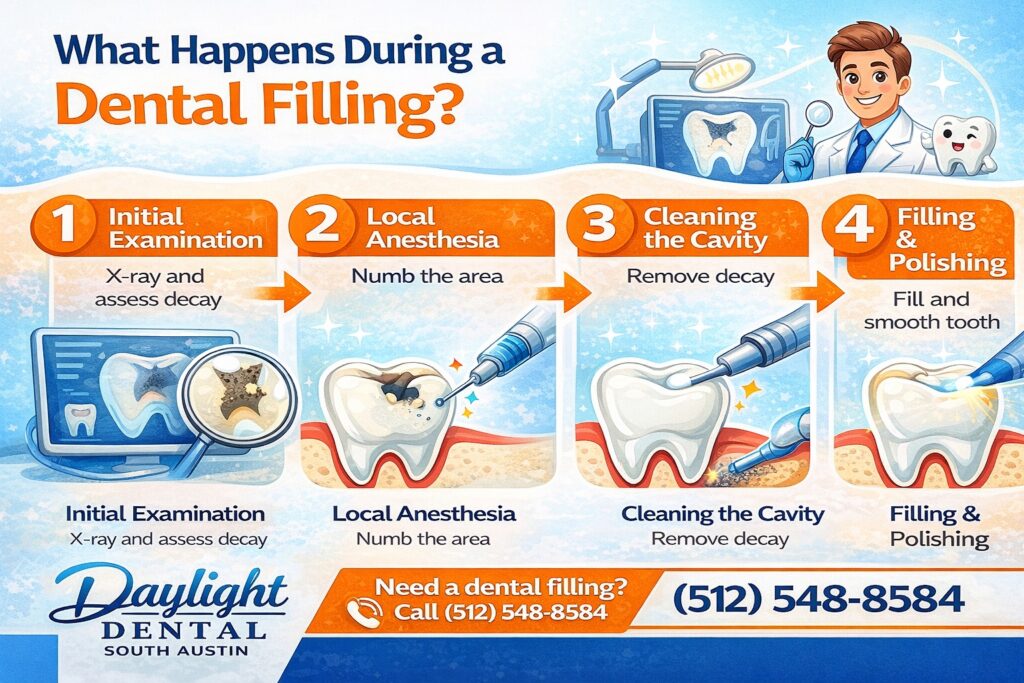
What Happens During a Dental Filling Procedure?
If your dentist recommends dental fillings in Austin, here’s what you can expect during the procedure:
- Initial Examination: The dentist will start by examining the affected tooth and taking an X-ray if necessary to determine the extent of the decay.
- Local Anesthesia: Before starting, your dentist will numb the area around the tooth with a local anesthetic. This ensures that you are comfortable and pain-free during the procedure.
- Cleaning the Cavity: The dentist will then remove the decayed part of the tooth using a dental drill. This process ensures that all infected tissue is cleared away before filling the cavity.
- Filling the Cavity: After cleaning the cavity, the dentist will fill it with the appropriate material (amalgam, composite, gold, or ceramic). The material is shaped to match the natural contours of your tooth.
- Polishing: Once the filling is in place, the dentist will polish the area to ensure that it feels smooth and fits comfortably with your bite.
The entire procedure typically takes around 30 to 60 minutes, depending on the size of the cavity. It’s a straightforward and minimally invasive treatment that can save your tooth from further damage.
Understanding the dental filling procedure helps patients feel more comfortable before treatment. This video shows how dentists remove tooth decay and restore the tooth with a dental filling.
Video Source: YouTube — Created by SurgMedia, a dental education channel that shares professional demonstrations of dental treatments and procedures.
If you’re experiencing any of the signs mentioned above, don’t wait until your cavity gets worse. The sooner you address it, the better the outcome will be. At Daylight Dental, we are here to help restore your smile and prevent any further complications from tooth decay. Contact us today to schedule a consultation and protect your oral health.
Frequently Asked Questions About Dental Fillings in Austin, TX
How long do dental fillings last?
The lifespan of a dental filling depends on the material used, but most fillings last between 5 to 15 years.
Can cavities heal without a filling?
No, cavities cannot heal on their own. They require a dental filling to prevent further decay and restore tooth function.
Is it necessary to get a dental filling right away?
Yes, delaying a dental filling can lead to worsening decay, pain, and more serious dental problems like infection or tooth loss.
How long does it take to get a dental filling?
The procedure typically takes 30 to 60 minutes, depending on the size of the cavity.
Will a filling look natural?
Yes, composite fillings can be matched to the color of your natural teeth, providing a seamless appearance.