

Signs of Complications After Wisdom Teeth Extraction in Austin, TX


Wisdom teeth extraction is a common procedure that many adults in Austin undergo, often in their late teens or early twenties. While it is generally safe and effective, complications can sometimes arise during the recovery process.
If you’re someone who enjoys Austin’s outdoor activities, whether it’s hiking in Barton Creek or relaxing at Zilker Park, dealing with an unexpected complication can impact your recovery and lifestyle. Knowing what signs to watch for can make all the difference in ensuring a smooth recovery.
This blog will help you identify common complications after wisdom tooth removal and explain when it’s time to reach out to a professional for assistance.
What to Expect After Wisdom Teeth Extraction
After wisdom teeth extraction, recovery time and symptoms can vary depending on the complexity of the procedure and individual healing responses. While most patients experience mild discomfort and swelling, understanding the typical recovery timeline can help set realistic expectations.
Normal Recovery Timeline
For the first few days following wisdom tooth removal in Austin, it’s normal to experience some level of pain, swelling, and bruising. Swelling around the cheeks and jaw is common, peaking at around 48 hours post-surgery before gradually decreasing.
Bruising might appear on the face, but it typically fades in a week. Most patients can manage the discomfort with prescribed or over-the-counter pain medications, while ice packs help alleviate swelling during the first 24 hours.
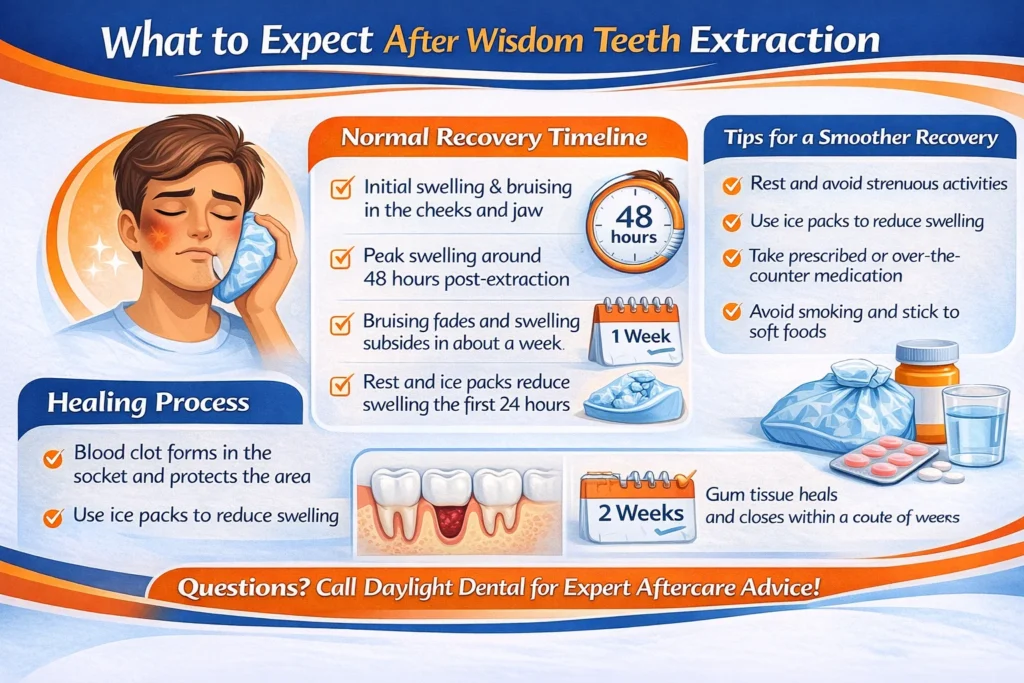
It’s important to rest during the initial recovery phase. Avoid any vigorous physical activities or exercises that could increase your heart rate and blood flow, potentially leading to more swelling or bleeding.
Healing Process
The healing process begins immediately after the extraction. A blood clot forms in the extraction site, which helps to protect the bone and nerves. Over the next few days, the gum tissue starts to close, and within a couple of weeks, the soft tissue will heal. During this time, it’s crucial to avoid disturbing the clot, as this could lead to complications like dry socket.
Following the aftercare instructions provided by your dentist or oral surgeon is essential for a smooth recovery. Gentle rinsing with saltwater, avoiding smoking, and sticking to soft foods can help ensure the extraction site heals properly. Proper aftercare reduces the risk of infection and speeds up the healing process.
Common Signs of Complications
While most recoveries go smoothly, there are certain signs that can indicate a complication. Recognizing these symptoms early can prevent further issues and help you seek the appropriate care.
Infection
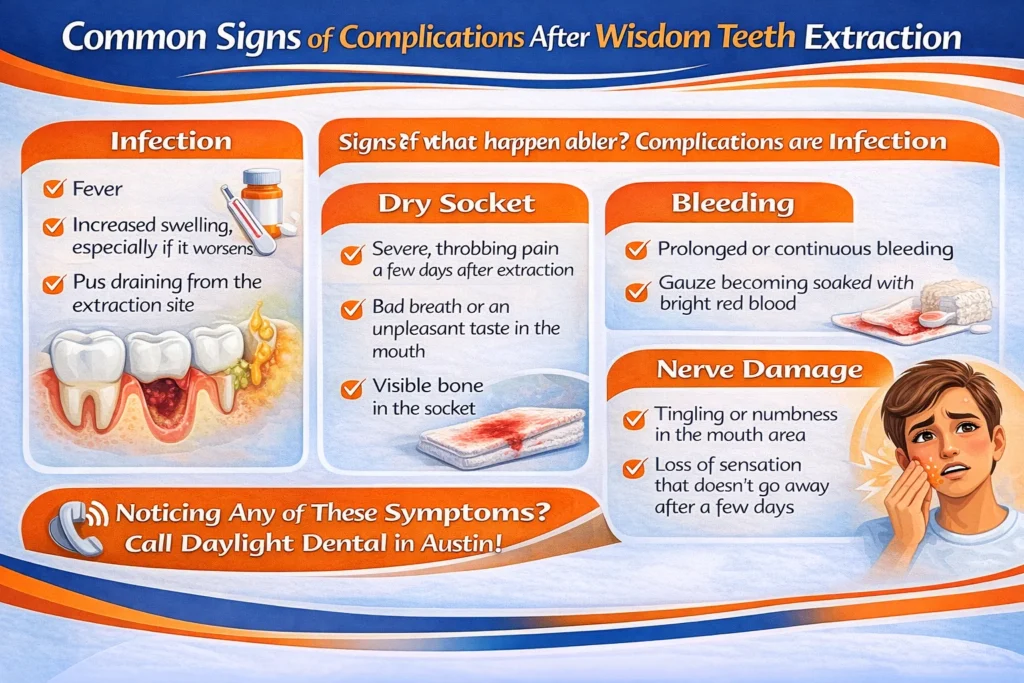
One of the most common complications after wisdom teeth extraction is infection. Signs of infection may include:
- Fever
- Increased swelling, especially if it worsens instead of improving
- Pus draining from the extraction site
If you notice these signs, it’s important to contact a dentist immediately. Left untreated, an infection can spread and cause further complications.
Dry Socket
Dry socket occurs when the blood clot that forms in the extraction site is dislodged or dissolves prematurely. Without this clot, the bone and nerves are exposed, causing severe pain. Symptoms of dry socket include:
- Severe, throbbing pain that starts a few days after the extraction
- Bad breath or an unpleasant taste in the mouth
- Visible bone in the socket
Dry socket can be extremely painful and requires professional care to treat. Your dentist will typically clean the site and place a special medicated dressing to protect it and promote healing.
Bleeding
Some bleeding after a wisdom tooth extraction is normal, but if you experience prolonged or continuous bleeding, it could indicate a problem. It’s important to bite down gently on gauze for 30 to 45 minutes to stop the bleeding. If it doesn’t stop, or if bleeding worsens after the first few hours, contact your dentist for further evaluation.
Nerve Damage
Though rare, nerve damage can occur during wisdom teeth extraction, especially if the tooth roots are close to the nerves. Symptoms of nerve damage include:
- Tingling or numbness around the mouth, lips, or chin
- Loss of sensation that doesn’t go away after a few days
If you experience persistent numbness or tingling in the affected area, it’s important to seek professional care right away.
Swelling and Pain Beyond Normal
It’s expected that you will experience some swelling and discomfort after the procedure, but if the swelling or pain lasts longer than expected, or if the pain becomes severe, it could signal a complication. Swelling should start to subside after the first 72 hours. If you’re experiencing significant discomfort after this time, or if it worsens, consult with your dentist.
When to Seek Professional Help
While some discomfort is normal after wisdom tooth removal in Austin, it’s important to know when to seek professional help. If you notice any of the signs of complications mentioned above, don’t hesitate to reach out to your dentist. The sooner you address the problem, the easier it is to treat.
Timing for Assistance
- If pain worsens after a few days or doesn’t improve with prescribed medications.
- Excessive swelling or swelling that doesn’t subside after the first few days.
- Fever or signs of infection.
- Prolonged bleeding or bleeding that doesn’t stop with pressure.
Contacting an Austin Dental Professional
At Daylight Dental, we’re here to provide the care you need during your recovery process. If you’re experiencing any of the symptoms mentioned, don’t wait. Schedule a consultation with us. Our team in Austin is ready to provide the necessary care to ensure a smooth and healthy recovery.
Emergency Situations
If you believe you are facing a dental emergency, such as significant swelling, severe pain, or excessive bleeding, contact us immediately. We’re available to assist you and provide quick intervention to minimize any potential risks.
Preventing Complications After Wisdom Teeth Extraction
While complications are rare, following the right aftercare instructions is key to preventing them. Here are a few tips to ensure a smooth recovery:
Follow Post-Op Instructions
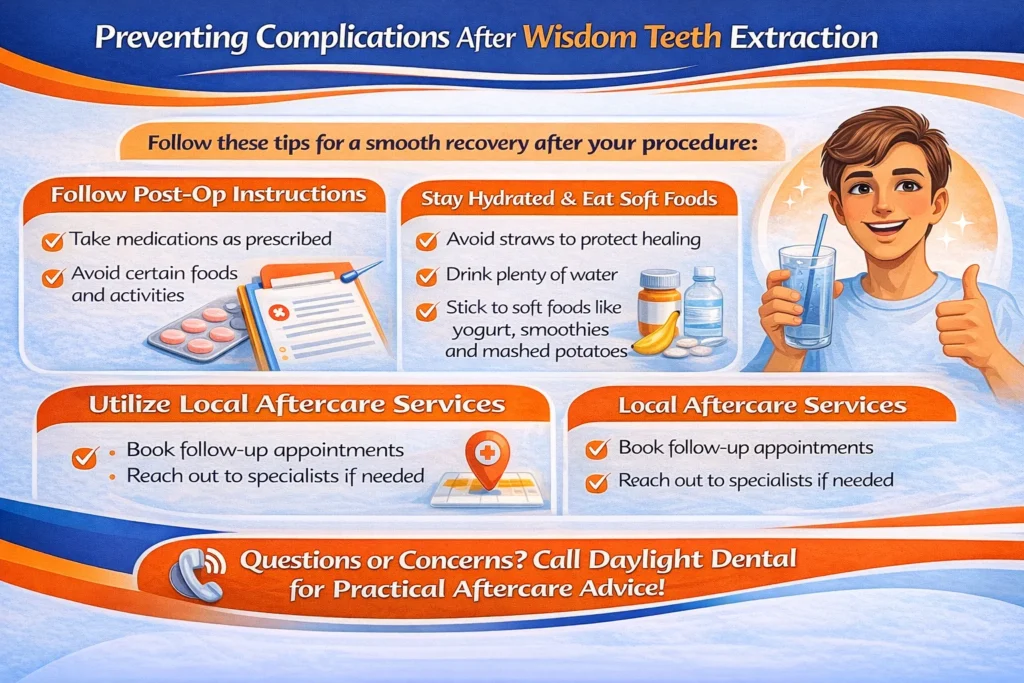
After your extraction, make sure to follow all aftercare instructions provided by your dentist or oral surgeon. These may include taking prescribed medications, avoiding certain foods, and keeping the extraction area clean without disturbing the blood clot.
Hydration and Diet
It’s important to stay hydrated throughout your recovery. Drink plenty of fluids, but avoid using straws, as the suction could dislodge the blood clot. Stick to soft foods like mashed potatoes, yogurt, and smoothies during the first few days. Avoid crunchy or hard foods that could irritate the extraction sites.
Local Aftercare Services in Austin
In Austin, we’re lucky to have a variety of aftercare services available to assist you during your recovery. Whether it’s follow-up appointments or access to trusted specialists, Daylight Dental offers comprehensive care to make sure your healing process is as smooth as possible.
Recognizing the signs of complications after wisdom tooth removal is crucial for a quick recovery. If you experience any of the symptoms we’ve discussed, be sure to reach out to a trusted professional right away. Most complications are preventable with the right care, and by following your dentist’s instructions, you can ensure a smooth recovery.
At Daylight Dental, we’re here to support you every step of the way. If you’re experiencing any symptoms or need help with your recovery, don’t hesitate to reach out. Schedule your appointment today with our friendly team in Austin, TX, and get the care you need to ensure a healthy smile!
People Also Ask
How long does recovery take after wisdom tooth extraction?
Recovery typically takes 1-2 weeks for soft tissue healing, but full recovery can take several months for bone healing.
What should I do if I experience severe pain after surgery?
Severe pain could indicate complications like dry socket. Contact your dentist immediately for advice and treatment.
When should I call my dentist after wisdom tooth removal?
Call your dentist if you experience persistent bleeding, swelling that worsens, fever, or signs of infection.
Can I eat normally after wisdom tooth extraction?
Stick to soft foods for the first few days, and avoid hard, crunchy, or sticky foods that could irritate the healing sites.
Can I brush my teeth after wisdom tooth extraction?
Yes, but avoid brushing near the extraction sites for a few days to prevent irritation and protect the blood clot.